 Ok it's time. I've been putting off this announcement, but as the end of the season draws closer i just can't avoid it anymore. It's time to share that, after a 20 year career in agriculture, i won't be farming next year.
this won't come as a complete surprise to Most of you. I announced in the spring that I've gone through major life changes and was scaling the farm back considerably. I went into this season unsure where it would take me, but also not ready to give up the farm that I've poured my heart and soul into, and the relationships with all of you that have sustained me for so many years.
But now I'm ready to see what my life is like without farming. I've run corvus landing for 14 years and farmed for 20, and i think I'm as good as I'm going to get at it. I've done what i wanted to do. I have a great new career opportunity in the construction business, and I'm relishing the chance to learn a whole new industry. I'm ready for a new challenge.
But it's so hard to let go. The farm has been my passion, my work, and the foundation for so many relationships in my life. It's fed me, literally and figuratively, and provided me an integral connection with the seasons, the earth, and myself. It's fed all of you, and those relationships have sustained and motivated me. I've felt secure in having a clear contribution to my community and a deep support network built around that. As the last market gets closer, I'm finding that changing those relationships is the hardest thing for me to wrap my head around. I will miss you all profoundly.
But i just can't do this anymore, not as my primary source of income. One thing I've realized as I've stepped into the wider world of work is how hard farmers work for so little money.
farming is complicated, risky, and stressful. There is so much that's out of my control, so many elements and factors to juggle, and so much failure every day. The seasonal nature of the farm puts pressure on every task and every crop, and you're constantly questioning whether you're doing enough, if you're keeping up, or if you're even doing it right. Running a business is always risky and challenging, but on the farm there's so many extra layers of stress and uncertainty.
Farming is severely undervalued in our society. The complexity of a farm business is not reflected in the gross sales. The labor and skill and attention to detail required isn't reflected in the prices i can charge. And I've made it work and succeeded in investing in land and the farm business for many years. It's not impossible! Just a hell of a lot of work and getting harder as i get older and the cost of everything rises around me. I think I've outgrown the hustle.
With housing in the area so scarce and expensive, staffing has proven very difficult. I can't even afford to rent in the area anymore, let alone pay my seasonal crew enough to do so. As a result it's hard to find people and i have to start with a fresh, inexperienced crew every year. Add on that I'm not getting any younger and need to start planning ahead for retirement, and it just is not economically sustainable for me anymore.
I don't often get political, but Our food system is built on cheap labor, environmental exploitation, and government subsidies. This makes food much more affordable, which we all benefit from. We all need to eat! But there is a cost to the low price of food, and it's difficult to sustain an alternative business model within the global economic system we all live in.
So for both personal and economic reasons, I'm going to try something else for a while. I'll be keeping and maintaining the farm property, so corvus landing may come back in some form in the future! But for now i need to get some space, try something else, and then decide if there's a way farming can fit into my life.
And I will miss it. I will miss the market. I will miss coming to the hospital. I'll miss making flower bouquets and providing plants for your gardens. I'll miss my plants and my soil and my field. I'll miss it all so much.
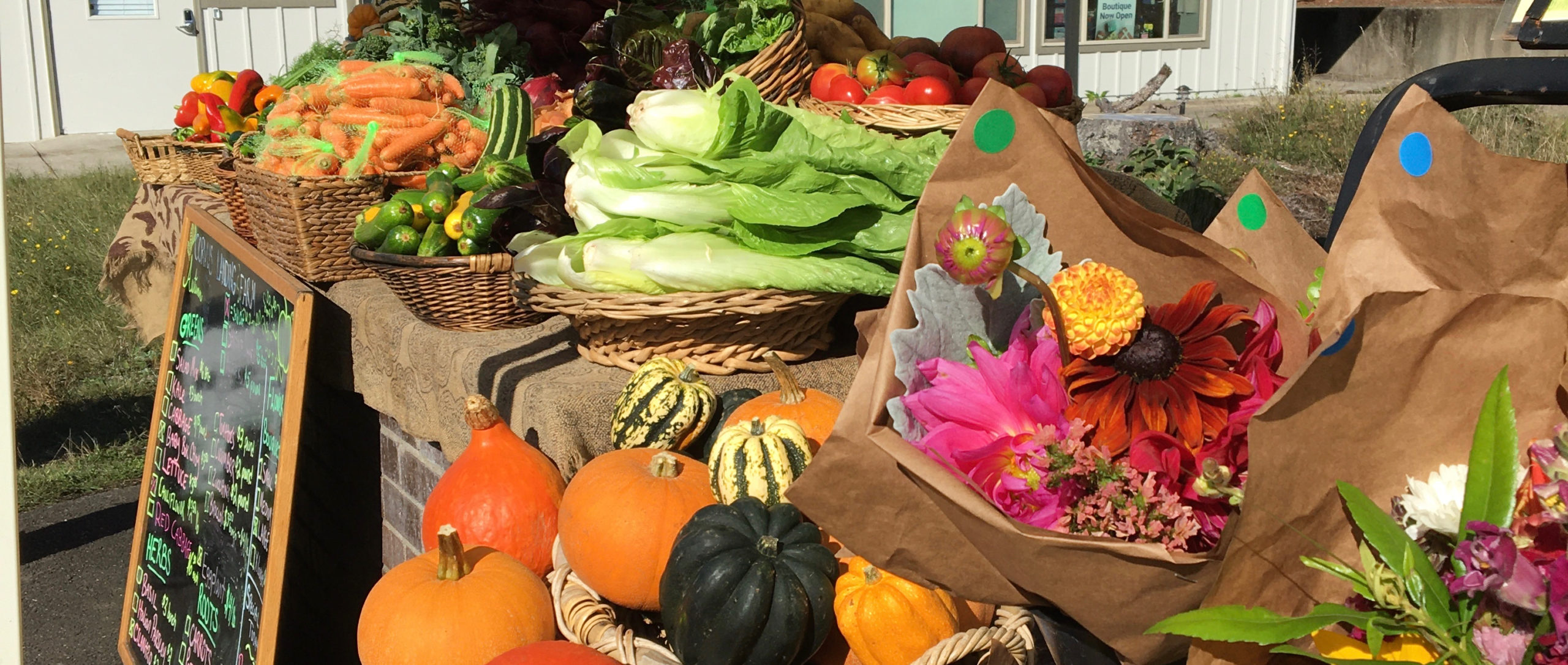
But most of all i will miss all of you. Thank you, thank you, thank you for the many years of support and community. We have 2 more weeks of markets, and i hope you will come shop and visit us one more time. Graysea and I will be there with lots of delicious fall produce and a beautiful colorful display!
I'm honored that you have made my food and my farm a part of your life. It's so hard to say goodbye but it's time. I love you all and look forward to what the future brings for all of us!


Visit our market stands for a full selection of what we grow. See what's new each week, enjoy our colorful display, and try new things or old favorites.
We provide bulk DIY blooms and a la carte wedding florals for your Oregon coast wedding. Now booking.
We have grown veggie starts for your organic coastal garden since we started in 2010. We now include annual flowers and a few perennial ornamentals.
Brighten your day or someone else's with our beautiful fresh flowers. Our flowers are available at our market stands, through a bouquet subscription, or for your wedding or event.
Skip the line! Pre-order online for pickup at the farm or our markets, May through October.

Ok it's time. I've been putting off this announcement, but as the end of the season draws closer i just can't avoid it anymore. It's time to share that, after a 20 year career in agriculture, i won't be farming next year. This won't come as a complete…
It’s time to announce that some big changes have been happening around the farm over the last year. After 18 years together, Mike and I split up last year. I have also decided to walk away from my original, rented ¾ acre farm field. It’s been a year…
Welcome everyone! This is the last week of CSA. Please return your bags! Full SharesBok choyRed CabbageRoma TomatoesPeppers Half SharesKale Both SharesPotatoesCarrotsDelicata SquashCucumbersSalad mixFennel We made it to the end of the CSA season! We got a rough start to the year, but the warm nights and dry…
Ok it's time. I've been putting off this announcement, but as the end of the season draws closer i just can't avoid it anymore. It's time to share…
It’s time to announce that some big changes have been happening around the farm over the last year. After 18 years together, Mike and I split up last…
Welcome everyone! This is the last week of CSA. Please return your bags! Full SharesBok choyRed CabbageRoma TomatoesPeppers Half SharesKale Both SharesPotatoesCarrotsDelicata SquashCucumbersSalad mixFennel We made it to…
Welcome friends! This is the 2nd to last week of CSA shares!! The final share week is October 25-27. So be sure to collect all your bags and…
Welcome to another week of farm fresh, local grown produce!! I hope you’re ready for some winter squash! Full SharesFennelKale All SharesCucumber and/or zucchiniTomatoesPeppersSaladArugula microgreensPotatoesGill's Golden Pippin Squash…
Thank you for joining us this week and a happy October to you all! We have a new vegetable making an appearance as we harvest purple cabbage for…
Welcome to week 12! Thanks for being with us today as we move into the Fall season! Full sharesBroccoliCarrotsPotatoes BothZucchiniCucumbersGreen onionsKaleSweet pepperJalapeñoFennelCilantroCherry tomatoes This week we have fennel,…
In your share this week: Green CabbageSweet bell peppersCauliflowerBeetsCarrotsCherry TomatoRomano Green Bean Full shares only: TomatoBaby Bibb lettuceOnion Sorry for the late share notes this week, things have…
CSA Week 10 Welcome back to another week of hand-harvested produce straight from the source and into your kitchen! This week we have…. —-Full shares—-CauliflowerBeans —-Half shares—-Slicer tomatoes…
Greetings Corvus Landing Family! Welcome to another week of fresh produce harvested with gratitude and care! This week we have… —-Full shares—-TomatoesZucchiniPotatoes —-Half shares—-Cherry tomatoesCauliflower —-Both—-BeetsNapa cabbageCarrotsCucumbersBeansBasil We’re…
Hi Corvus Landing family! Hope you all had a great weekend and and are looking forwards to a new batch of delicious produce straight from the farm! —-Full…
Hi Corvus Landing family! What a beautiful start to our week, with the rains from last week energizing the farm, and the sun on Monday boosting the plants…